
Table of Contents
Introduction
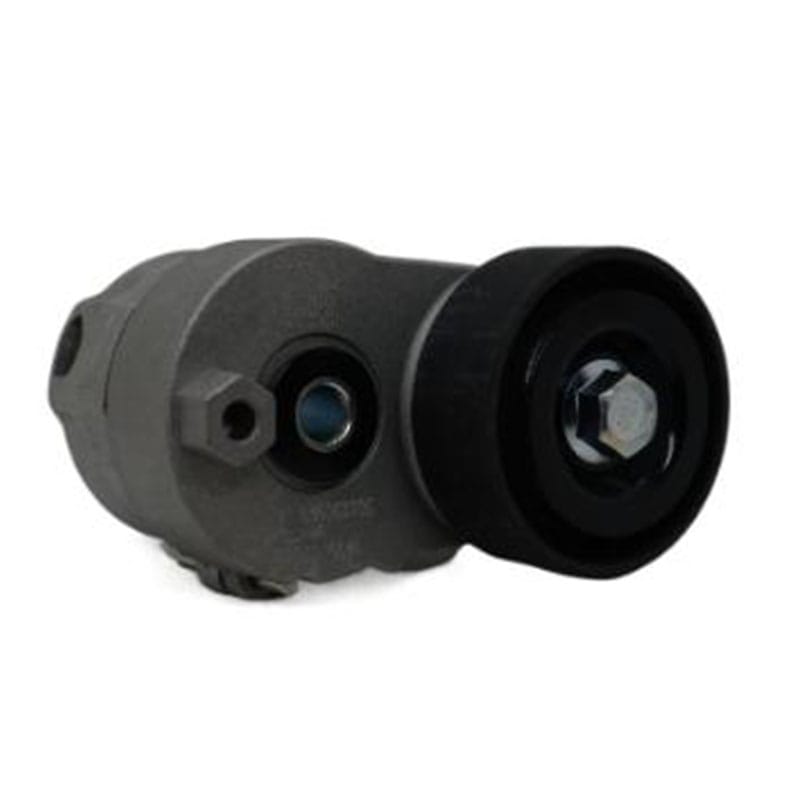
A belt tensioner is easy to overlook because it does not generate engine power, pump coolant, or produce electricity by itself. Yet many engine accessories depend on it indirectly. Its job is to maintain controlled tension on the drive belt so that rotational force can move reliably from the engine crankshaft to belt-driven components.
When that control begins to deteriorate, the first symptom may not appear at the belt tensioner itself. You might hear an unusual noise near the front of the engine, notice abnormal belt movement, see uneven wear along one edge, or encounter changes in the operation of a belt-driven accessory.
That is why belt tensioner diagnosis should focus on the complete accessory-drive system.
The engine system components used on heavy trucks include tensioners, belts, pumps, alternator-related components and other parts that must operate in alignment. A problem in one part of this system can influence several others.
Understanding how a belt tensioner works makes those relationships much easier to diagnose.
What Is a Belt Tensioner?
A belt tensioner is a mechanical component designed to maintain suitable tension on an engine accessory drive belt.
Many modern systems use an automatic belt tensioner. Rather than requiring repeated manual adjustment, the tensioner uses an internal spring mechanism to apply force to the belt through a pulley.
As the belt experiences small changes caused by temperature, operating load, normal wear, engine-speed variation, and accessory movement, the tensioner can move within its designed range.
This movement helps maintain belt contact with the pulleys.
The tensioner therefore performs two related jobs.
First, it keeps enough force on the belt to support reliable power transfer.
Second, depending on its design, it can help control dynamic belt movement rather than holding the belt completely rigid.
That second role is important because an accessory belt is continuously exposed to changing rotational conditions. Engine speed rises and falls, accessories create varying resistance, and individual pulleys may introduce small dynamic forces into the system.
A properly operating tensioner manages these conditions without allowing excessive belt slip or uncontrolled movement.
How a Belt Tensioner Works With the Drive Belt
The belt tensioner does not work independently. It is one component in a mechanical power-transfer path.
A mechanical belt drive transfers rotational movement between pulleys. In a truck engine accessory system, the crankshaft pulley generally provides the driving force, while the belt carries that rotation toward other components.
Depending on the engine configuration, these can include the alternator, water pump, compressor, fan-related drive components, or other accessories.
The tensioner pulley presses against the belt at a defined position.
Its spring mechanism creates the force required to maintain belt contact. As operating conditions change, the tensioner arm can move slightly to compensate.
Idler pulleys may also be present. Their purpose is usually to guide the belt along the required path and create suitable wrap around individual accessory pulleys.
The complete system therefore consists of several interacting elements:
crankshaft pulley → drive belt → tensioner → idler pulleys → driven accessories.
If one pulley becomes misaligned, one bearing develops excessive movement, or an accessory shaft becomes difficult to rotate, the tensioner may respond visibly even though it is not the original source of the problem.
This is why observation of the tensioner can provide useful diagnostic information about the rest of the belt drive.
Main Belt Tensioner Components and Functions
| Component | Main Function | Inspection Focus |
|---|---|---|
| Tensioner arm | Positions the pulley against the belt | Excessive movement, wear, alignment |
| Internal spring | Creates tensioning force | Reduced control, abnormal arm position |
| Tensioner pulley | Guides and loads the belt | Surface wear, alignment, damage |
| Pulley bearing | Allows smooth pulley rotation | Roughness, noise, play |
| Damping mechanism | Controls rapid tensioner movement | Excessive oscillation or unstable motion |
| Mounting base | Secures tensioner to engine assembly | Fastener security, cracks, mounting condition |
| Travel indicator | Shows tensioner operating position where fitted | Position relative to designed range |
| Stop mechanism | Limits tensioner movement | Impact marks or abnormal contact |
This table shows why describing the belt tensioner as simply a pulley is incomplete.
The pulley is only the visible part. The spring, bearing, arm, mounting base, damping characteristics, and operating range all influence how the component behaves.
Why Correct Belt Tension Matters
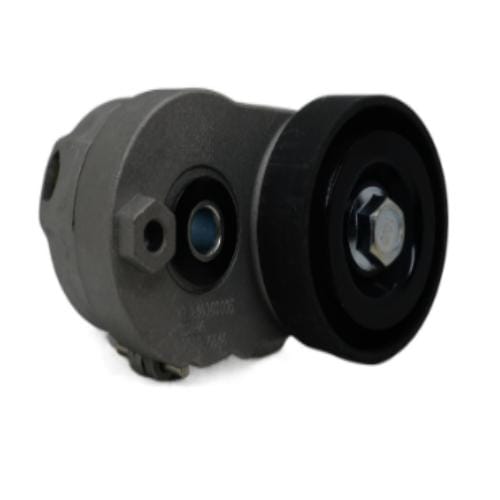
A drive belt needs controlled tension to transmit rotational force efficiently.
If tension becomes too low, the belt may lose stable contact with one or more pulleys. Slip can create noise, heat, unstable accessory speed, and surface wear.
Excessive tension creates a different problem.
Too much belt force can place unnecessary radial load on accessory bearings, pulley bearings, shafts, and related components.
The correct condition is therefore not maximum tension. It is controlled tension suitable for the specific drive system.
Alignment is equally important.
Even a correctly tensioned belt can wear rapidly if one pulley sits at an incorrect angle or offset. The belt may begin moving toward one edge of a pulley, creating edge wear and unusual tracking.
This gives technicians three important variables to consider together:
tension + alignment + pulley condition.
Evaluating only one of these can leave the real cause of the problem unresolved.
1. Squealing or Chirping From the Belt Drive
Unusual belt-drive noise is one of the most recognizable signs that an inspection is needed.
A high-pitched squeal can occur when belt and pulley surfaces are not maintaining stable contact. In some situations, changing accessory load or engine speed can make the sound more noticeable.
Chirping may have a different pattern and can sometimes relate more closely to alignment, pulley geometry, or localized belt movement.
However, neither sound automatically proves that the belt tensioner has failed.
Similar noise can come from:
belt surface deterioration, pulley contamination, pulley misalignment, idler bearings, accessory bearings, incorrect belt routing, or an accessory that does not rotate normally.
The timing of the sound provides useful evidence.
A noise that appears immediately after startup may lead to a different inspection path from one that develops only after the engine reaches operating temperature.
Similarly, noise that changes when electrical or other accessory loads increase can provide clues about which pulley or driven component deserves closer inspection.
Use noise to identify an operating condition, not to identify a component by assumption.
2. Visible Belt Tensioner Movement or Vibration
An automatic belt tensioner is designed to move. Some movement during engine operation is therefore normal.
The more important question is how it moves.
Controlled movement within a relatively stable range is different from rapid repeated oscillation, large swings, impact against a stop, or movement that changes dramatically with engine speed.
Excessive tensioner movement may result from several conditions.
The tensioner’s internal damping mechanism could be deteriorating. The spring mechanism could be affected. A belt could have changed in condition. Another pulley could be running irregularly.
A driven accessory can also introduce dynamic movement into the system.
For this reason, an oscillating tensioner should trigger inspection of both the tensioner and the complete belt path.
Look at whether the movement corresponds with a specific pulley rotation, accessory engagement, or change in engine speed.
Patterns often reveal more than a stationary inspection.
3. Belt Tracking Away From the Pulley Center
A correctly operating drive belt generally follows the intended pulley path.
If the belt consistently moves toward one edge, begins contacting a pulley flange abnormally, or shows edge wear, alignment should be investigated.
The belt tensioner can contribute to tracking problems if its pulley is no longer aligned correctly.
Wear in the tensioner pivot, pulley bearing, mounting point, or arm can alter the pulley’s angle relative to the belt.
However, other components can produce exactly the same symptom.
An idler pulley may be tilted. An accessory pulley may sit at an incorrect offset. A mounting bracket may be damaged. A bearing may allow the shaft to move under load.
That means belt tracking should be inspected across the entire pulley system.
A useful approach is to view the belt path from several angles and compare each pulley with the pulleys before and after it.
The question is not simply whether the belt is centered on the tensioner.
The question is whether every pulley shares the alignment needed for the belt to travel consistently through the whole system.
4. Rough or Noisy Tensioner Pulley Bearing
The tensioner pulley contains a bearing that allows it to rotate continuously while applying force to the belt.
As with other rotating bearings, its condition influences both noise and belt stability.
A deteriorating bearing may develop rough rotation, unusual sound, excessive play, or resistance.
Bearing noise can become difficult to identify because several pulleys operate close together at the front of the engine.
An idler bearing, alternator bearing, water-pump bearing, compressor pulley, or other rotating component can produce a similar sound.
Inspection therefore needs to isolate the source carefully.
When the belt is removed during an appropriate service procedure, pulley rotation and bearing condition can be assessed according to applicable maintenance guidance. Any unusual roughness, looseness, or physical damage deserves investigation.
The tensioner arm itself should also be checked.
A good pulley bearing cannot compensate for excessive pivot wear or mounting movement elsewhere in the tensioner assembly.
5. Unusual Drive Belt Wear
The drive belt acts almost like a condition report for the pulley system.
Its wear pattern can reveal what has been happening during operation.
Edge damage may point toward tracking or alignment problems.
A polished or glazed surface can indicate abnormal contact or slipping conditions.
Damaged ribs can relate to pulley condition, contamination, misalignment, or foreign material entering the drive.
Cracking and other forms of deterioration can develop as the belt ages and operates through repeated thermal and mechanical cycles.
Uneven wear is particularly valuable diagnostically.
If one section of the belt shows much greater deterioration than another, look for a specific pulley or interface that could be causing it.
The important point is that replacing a damaged belt without investigating why it became damaged may leave the underlying cause unchanged.
If the tensioner, pulley, alignment, or driven accessory created the wear pattern, the next belt may experience similar conditions.
Belt condition and tensioner condition should therefore be evaluated together.
6. Accessory Operation Changes
A belt tensioner affects components far beyond the tensioner itself because the drive belt carries engine rotation to other accessories.
Consider the alternator.
If the belt cannot maintain suitable contact with the alternator pulley, alternator speed may become unstable under certain operating conditions.
The same principle applies to a belt-driven water pump or other engine accessory.
This means an apparent accessory problem can sometimes originate elsewhere in the belt drive.
However, the opposite is also true.
A failing accessory bearing or pulley can increase resistance, disturb belt movement, and cause the tensioner to behave abnormally.
That creates a two-way diagnostic relationship:
belt-drive problems can affect accessories, and accessory problems can affect the belt drive.
When one belt-driven component develops unusual behavior, technicians should inspect how the entire accessory system responds rather than examining only the visible symptom.
This system-level approach often reveals causes that isolated component replacement can miss.
How to Inspect a Belt Tensioner Systematically
A good belt tensioner inspection begins before the belt is removed.
First, observe the complete belt route.
Confirm that the belt follows the intended path and sits correctly on every pulley.
Next, inspect belt condition.
Look for uneven wear, edge damage, missing rib material, contamination, glazing, cracks, or other visible changes.
Then observe the tensioner position.
Where an operating-range indicator is incorporated into the design, note whether the tensioner sits within the appropriate range according to the applicable technical information.
With the engine operating under appropriate inspection conditions, observe tensioner movement.
Look for excessive oscillation, unusual vibration, impact against stops, or movement that changes significantly as engine speed changes.
Inspect pulley alignment visually.
Also examine mounting points, nearby brackets, idlers, and accessories.
The practical sequence is:
belt condition → routing → tensioner position → movement → pulley alignment → accessory condition.
This prevents the tensioner from being judged without considering what it is responding to.
Why the Belt Is Only Part of the Diagnosis
When a drive belt develops a problem, replacing only the belt can be tempting because the damage is visible.
But a belt usually responds to the mechanical conditions around it.
If an idler pulley is misaligned, the new belt will still encounter that misalignment.
If the tensioner cannot maintain proper control, a new belt does not restore the tensioner’s function.
If an accessory bearing is difficult to rotate, the drive system will continue experiencing the additional resistance.
Contamination matters as well.
Fluid or other material reaching the belt can alter surface behavior and should lead to investigation of the source.
This is why the complete drive system should be treated as a chain:
crankshaft pulley → belt → idlers → tensioner → accessories.
Each component influences the others.
The most useful repair decision comes from understanding the chain, not simply identifying the component with the most obvious visible wear.
How to Identify the Correct Belt Tensioner
Belt tensioner identification should begin with the engine configuration.
Truck model information can be useful, but engine information is usually more specific because accessory-drive layouts are closely connected to engine design.
Record the existing OEM reference or other readable component markings whenever possible.
Then compare physical interfaces.
Important features can include:
- mounting-hole pattern
- mounting orientation
- pulley diameter
- pulley width
- pulley groove or surface design
- belt position
- arm shape
- tensioner offset
- operating travel
- fastener configuration
Small differences matter.
A pulley positioned several millimeters farther forward or backward can alter belt alignment even if the tensioner bolts directly to the engine.
Similarly, two tensioners with similar housings can use different spring characteristics or operating ranges.
A strong compatibility check therefore combines:
engine model + component reference + mounting geometry + pulley alignment + belt configuration.
Why Similar-Looking Belt Tensioners May Not Be Interchangeable
Belt tensioners are a good example of why appearance is not enough for parts identification.
Two assemblies may use similarly shaped arms and pulleys but behave differently once installed.
The mounting base may position one pulley at a different offset.
The pulley may have a different diameter or width.
The internal spring may apply force through another range of movement.
The tensioner’s neutral position may also differ.
These differences influence how the belt contacts the surrounding pulleys.
Even when a tensioner physically bolts into place, incorrect pulley alignment or operating geometry can make it unsuitable for the application.
The installation angle also matters because the arm must move through the intended path without contacting nearby engine components.
For this reason, compatibility should be confirmed technically before installation.
A photograph can help identify a general tensioner family, but OEM references, engine configuration, dimensions, and mounting geometry provide much stronger evidence.
What to Check Before Installing a Replacement Belt Tensioner
Before installing a replacement belt tensioner, inspect the components that will continue operating around it.
Start with the drive belt.
If it shows abnormal wear, identify the pattern and consider what created it.
Inspect idler pulleys for bearing condition and alignment.
Check accessory pulleys for visible damage, contamination, unusual play, or misalignment.
The tensioner mounting surface also deserves attention.
It should allow the replacement assembly to sit correctly without distortion or debris affecting its position.
Fastener threads and mounting holes should be in suitable condition.
Compare the replacement tensioner with the removed component before installation.
Check the base, pulley position, arm orientation, dimensions, and mounting points.
After installation, verify belt routing carefully.
A belt incorrectly routed around only one pulley can alter tensioner position and accessory rotation.
The final system should allow the belt to sit naturally within every pulley path without forcing the tensioner outside its designed operating range.
How Pulley Alignment Influences Belt Tensioner Life
Alignment deserves separate attention because it affects almost every component in the belt drive.
When pulleys share the correct plane, the belt can move through the system with relatively stable lateral position.
If one pulley is tilted or offset, the belt is continuously forced sideways as it enters and leaves that pulley.
This can create edge wear, noise, increased tensioner movement, and abnormal loading.
The tensioner itself may then appear to be unstable because it is responding to a problem created elsewhere.
Misalignment can result from several causes:
worn bearings, damaged brackets, incorrectly installed accessories, distorted mounting points, unsuitable replacement components, or pulley-position differences.
That is why alignment should be reconsidered whenever belt problems repeatedly return.
Repeated belt wear is information.
Instead of treating each damaged belt as a separate event, technicians can compare the wear pattern and investigate what remains unchanged in the drive system.
Preventive Maintenance for the Accessory Belt Drive
Preventive maintenance focuses on detecting changes before they develop into larger drive-system problems.
Begin with visual belt inspection.
Look for edge wear, surface changes, rib condition, contamination, or unusual tracking.
Observe the tensioner during operation when appropriate.
Its movement can provide useful information about dynamic belt behavior.
Pulley alignment should remain consistent.
Idlers and accessory pulleys should not show unexpected movement or obvious bearing-related symptoms.
Contamination sources should be addressed rather than repeatedly cleaning the belt.
Mounting brackets and tensioner fasteners should remain secure because even small structural movement can influence pulley alignment.
Maintenance history adds another useful dimension.
If the same vehicle repeatedly develops belt noise or edge wear, compare earlier findings. Recurring patterns may reveal a persistent alignment, accessory, or mounting problem.
The objective is not merely to keep a belt installed.
It is to maintain a stable mechanical path through which engine rotation can reach every belt-driven accessory reliably.
A Practical Four-Point Belt Drive Check
A simple four-point framework can help make inspection more consistent.
Use TAPS:
Tension checks whether the tensioner is operating within its intended range and controlling belt movement consistently.
Alignment checks whether the tensioner, idlers, and accessory pulleys share the intended belt path.
Pulley condition evaluates bearings, surfaces, mounting stability, and rotational behavior.
Surface condition evaluates the belt for glazing, cracks, edge damage, contamination, or unusual wear.
These four observations work together.
Good tension cannot compensate for poor alignment.
Correct alignment cannot compensate for a damaged pulley bearing.
A new belt cannot compensate for a tensioner that no longer controls the system correctly.
The value of this framework is its simplicity: instead of evaluating individual parts independently, it encourages technicians to look at the conditions that determine how the whole belt drive behaves.
Common Belt Tensioner Maintenance Mistakes
One common mistake is replacing the belt tensioner because it appears to move during engine operation.
Automatic tensioners are designed to move. The question is whether that movement is controlled and consistent with the operating system.
Another mistake is assuming all belt noise comes from low tension.
Alignment, contamination, bearing condition, belt surface wear, and accessory pulleys can create similar sounds.
Replacing the belt without investigating its wear pattern is another missed opportunity.
Edge wear, glazing, rib damage, or repeated deterioration can provide valuable evidence about what is happening around the belt.
Visual matching during component selection can also cause problems.
A tensioner that looks nearly identical may use different pulley alignment or mounting geometry.
Finally, technicians can focus too heavily on the tensioner while overlooking the driven accessory that caused the tensioner to behave abnormally.
Good maintenance works in both directions: inspect what the tensioner is doing and inspect what the rest of the system is doing to the tensioner.
Conclusion
A belt tensioner plays a central role in controlling the engine accessory drive. It maintains belt tension, responds to changing operating conditions, supports stable pulley contact, and helps keep rotational power moving toward belt-driven accessories.
Six warning signs deserve particular attention: unusual belt noise, excessive tensioner movement, poor belt tracking, pulley-bearing symptoms, abnormal belt wear, and changes in accessory operation.
None of these symptoms automatically confirms a failed belt tensioner.
The drive belt, idlers, accessory pulleys, bearings, mounting brackets, alignment, and surrounding components all influence the same system.
The most reliable approach is therefore to inspect the belt drive as a complete mechanical path. Confirm the engine application, component reference, mounting geometry, pulley alignment, and operating behavior before reaching a conclusion.
When tension, alignment, pulley condition, and belt wear are considered together, belt tensioner problems become much easier to identify accurately.
FAQ
What does a belt tensioner do?
A belt tensioner maintains controlled force on the engine accessory belt so it can transfer rotation between the crankshaft and driven components. Automatic designs also respond to small changes in belt length and dynamic movement while helping keep the belt correctly engaged with the pulleys.
What are common signs of a bad belt tensioner?
Possible signs include excessive tensioner oscillation, unusual belt noise, poor tracking, uneven belt wear, rough pulley-bearing sound, or changes in belt-driven accessory operation. These symptoms can also come from pulleys, belts, bearings, alignment, or other accessories.
Can a belt tensioner cause uneven belt wear?
Yes. A worn tensioner pivot, misaligned pulley, damaged bearing, incorrect tensioner geometry, or unstable tension can contribute to abnormal belt wear. However, idlers, accessory pulleys, mounting brackets, and alignment should also be inspected before identifying the tensioner as the cause.
How do I identify the correct belt tensioner?
Start with the exact engine configuration and existing OEM reference. Compare the mounting-hole pattern, arm orientation, pulley diameter, pulley width, offset, belt position, and operating geometry. Similar-looking tensioners should not be considered interchangeable without technical confirmation.
Should the belt be inspected when replacing a belt tensioner?
Yes. The belt can reveal useful information about the condition of the drive system. Edge wear, glazing, damaged ribs, cracking, or contamination can indicate alignment, pulley, bearing, or tension problems that should be investigated before the accessory drive returns to service.
Need Help Choosing the Right Belt Tensioner?
If you’re unsure which belt tensioner matches your truck engine, belt configuration, pulley alignment, or OEM reference, our team can help review component markings, mounting details, and application information. Accurate fitment helps the complete accessory-drive system operate as intended. Contact our engine parts team for professional belt tensioner compatibility support.